

You can use the best shampoo, apply a carefully chosen conditioner and avoid excessive heat—then wake up with tangled, flattened or frizzy hair anyway.
The missing part of your routine might be what happens while you sleep.
Your hair remains in contact with your pillow for hours each night. Every time you turn over, individual strands move against the fabric. A rougher surface creates more resistance, while a smooth silk pillowcase allows the hair to move more freely.
A silk pillowcase is not a treatment for hair loss or damaged hair. However, switching your sleeping surface can be a simple way to reduce unnecessary overnight friction.
Here are seven practical benefits.
1. Silk creates a smoother surface for your hair
Hair friction influences tangling, manageability and the way hair feels. Weathering, colouring, bleaching and heat styling can make the surface of the hair more vulnerable to friction.
Traditional cotton pillowcases can feel soft to your hand while still gripping the hair as you move in your sleep. Silk has a naturally smooth surface, allowing strands to glide more easily.
This does not make hair indestructible. It simply removes one source of repeated resistance from your nightly routine.
2. It may mean fewer morning tangles
Knots form when loose strands twist around one another. Movement, friction, dryness and the condition of the hair all play a role.
If your hair regularly becomes tangled or matted while you sleep, a silk pillowcase can support a wider prevention routine:
-
Detangle your hair gently before bed.
-
Make sure wet hair is properly dried.
-
Use a loose braid or protective style if appropriate for your hair.
-
Avoid tight elastics.
-
Sleep on a clean silk pillowcase.
People with long, curly, textured, bleached or extension-treated hair may notice overnight tangling more because there is more opportunity for strands to catch.
For a deeper explanation, read our guide to what causes morning bed-head.
3. Silk can help your style look fresher in the morning
Nobody expects a salon blow-dry to look completely untouched after a full night’s sleep. But a smoother sleeping surface can help reduce the crushing and roughening that make a style look dishevelled.
This can be especially useful if you:
-
Wash your hair less frequently
-
Style it the evening before
-
Wear curls or waves
-
Have a fringe that changes shape overnight
-
Want to use less heat in the morning
The goal is not perfect hair without effort. It is to give yourself less correction to do when the alarm goes off.
4. It can be gentler on curls and waves
Curly and wavy hair often needs its pattern protected overnight. Friction can separate curl clumps, disturb definition and contribute to a halo of morning frizz.
A silk pillowcase works well alongside protective techniques such as loosely gathering curls at the top of the head or wearing a silk bonnet.
A bonnet is not essential for everyone. Some people prefer the simplicity of changing their pillowcase, especially if they find headwear uncomfortable during sleep.
5. Silk may reduce the appearance of overnight frizz
Frizz has several possible causes, including humidity, dryness, damage and the natural structure of your hair. No pillowcase can control all of them.
However, reducing the amount of rubbing that happens overnight may help your hair look calmer when you wake up.
Think of silk as one part of a low-friction routine rather than a cure. Gentle detangling, sensible heat use and products suited to your hair remain important.
6. It is a simple change that works while you sleep
Many beauty routines require extra time every day. A silk pillowcase does its job simply by replacing the pillowcase you already use.
Once it is on the bed, there is nothing to remember at midnight and no additional product to apply.
That makes it especially appealing if your current morning involves:
-
Detangling stubborn knots
-
Restyling flattened sections
-
Reapplying heat
-
Wetting curls to restore their shape
-
Fighting a fringe that has developed its own plans
The result will vary from person to person, but the change itself is effortless.
7. It feels luxurious without replacing all your bedding
You do not need a complete silk sheet set to give your hair a smoother sleeping surface. The pillowcase is the part that directly touches your hair.
Choosing one well-made silk pillowcase can therefore be a practical first step. It adds a more luxurious feel to the bed while keeping the investment focused where it matters.
Which type of silk pillowcase is best for hair?
Look beyond colour and shine. A useful product description should tell you:
Fibre composition
Choose genuine silk rather than wording such as “silky” or “silk-feel”. These terms often describe polyester satin.
Silk quality
Mulberry silk is prized for its long, consistent fibres and smooth finish. DREAMSILK pillowcases use 100% mulberry silk.
Momme weight
Momme describes the weight and density of silk. DREAMSILK uses 19 momme silk to provide softness with enough substance for regular use.
Closure
A secure zip closure helps keep the pillow neatly inside the case during the night.
Care instructions
Silk lasts longer when washed using cool water, a gentle cycle and suitable detergent. Clear care guidance is a sign that the seller expects the product to be used rather than merely admired.
How to protect your hair while sleeping
A silk pillowcase can help, but the best results come from combining it with sensible habits:
-
Detangle carefully before bed, starting at the ends.
-
Avoid sleeping with soaking-wet hair.
-
Use loose protective styles rather than tight ponytails.
-
Choose silk scrunchies instead of uncovered elastic bands.
-
Keep the pillowcase clean, particularly if you use leave-in products.
-
Alternate sides or pillows if one area receives more product build-up.
-
Limit unnecessary morning heat where possible.
How soon will you notice a difference?
Some people notice fewer tangles or less morning frizz almost immediately. For others, the benefit is subtler: curls hold their shape a little better, brushing feels easier or the hair requires less restyling.
Your result will depend on your hair type, its condition, how much you move during sleep and the rest of your routine.
The most realistic test is to use a silk pillowcase consistently for several weeks and compare your mornings.
So, are silk pillowcases worth it for hair?
A silk pillowcase will not repair split ends, reverse chemical damage or make hair grow faster.
What it can offer is a smoother surface that reduces avoidable overnight friction. For hair that tangles easily, loses its shape or wakes up frizzy, that small environmental change can make mornings noticeably easier.
Because it works every night without adding another step to your routine, it is one of the simplest ways to treat your hair more gently.
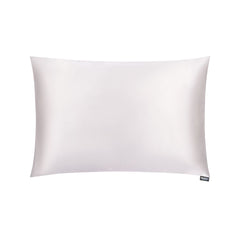
Explore the DREAMSILK luxury silk pillowcase in a choice of colours, made from 100% 19 momme mulberry silk.
For a night routine tailored to your hair, see our guides to preventing overnight tangles, protecting curls while sleeping and choosing a silk scrunchie.
Silk pillowcase hair FAQs
Can a silk pillowcase prevent hair loss?
No. Hair loss has many possible causes and should not be treated with a pillowcase. Silk may reduce some friction and pulling, but it is not a medical treatment.
Is silk good for damaged or bleached hair?
Damaged hair can be more susceptible to friction and tangling. A smooth pillowcase may provide a gentler sleeping surface, although it cannot reverse existing damage.
Should I put wet hair on a silk pillowcase?
It is usually better to dry your hair before sleeping. Wet hair is more vulnerable to stretching and can create moisture build-up on your bedding.
Is a silk bonnet better than a silk pillowcase?
A bonnet keeps the hair contained and can provide more complete protection for certain styles. A pillowcase is easier for people who dislike sleeping in headwear. Some people use both.
Do silk pillowcases help with frizz?
They may reduce friction-related frizz, but humidity, dryness, damage and styling habits also affect the result.


Laissez un commentaire