

Curls can look different after a night on a pillow. Some flatten, some stretch and others develop a halo of frizz. The best overnight routine depends on curl length, density and how you style it, but the aim is consistent: reduce unnecessary rubbing and avoid crushing the curl pattern.
Start with hair that is ready for bed
If you wash at night, give the hair time to dry as much as your routine allows. Putting damp curls under a tight bonnet or into a firm bun can change their shape and feel uncomfortable. If your hair needs leave-in care, use the amount that normally works for you. More product is not automatically better.
Try the pineapple method
Lean forward, gather your curls loosely near the crown and hold them with a soft scrunchie. The curls then sit above the area most likely to rub against the pillow. Keep the hold loose: if your scalp feels pulled, lower the tension or switch methods. Shorter curls may be easier to protect in several small sections.
Choose between a bonnet and a silk pillowcase
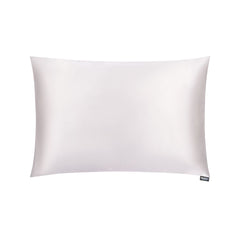
A well-fitting bonnet encloses the hair and can help keep a style in place. A silk pillowcase provides a smooth surface even if you dislike sleeping in headwear. Some people use both; some use neither. A pillowcase does not hold curls in place the way a bonnet can, so choose based on your actual styling goal.
The fibre and weave are different things. If you are comparing a silk pillowcase with a polyester satin one, read our silk vs satin guide.
Use a gentle tie
Traditional elastics can leave a sharp crease if wrapped tightly. A silk-covered scrunchie offers a broader, smoother contact area. It still has an elastic core, so do not twist it until the style feels restrictive. For lighter hold, try a skinny style; for a larger gathered section, a regular scrunchie may suit you.
What about braids or twists?
Loose braids and twists can keep longer curls organised overnight, but they may change your curl pattern. If you want your wash-day definition intact, a pineapple or bonnet may suit better. If you want a braid-out or twist-out, let the set dry fully before unravelling.
Refresh curls in the morning
Take down your style and let the roots settle for a few minutes. Use fingertips to lift flattened areas, then mist or apply a small amount of your usual styling product only where needed. Avoid brushing dry curls if that usually separates your curl clumps. Our bed head guide explains why some sections flatten more than others.
Related reading: overnight tangle prevention.
Build a routine around your curl length
Short curls may be too short for a pineapple. In that case, a smooth pillowcase or roomy bonnet can be simpler than trying to force a tie to grip. Medium-length curls often fit comfortably into a loose high gather. Longer or very dense curls may need sectioning, a larger bonnet or a couple of loose twists. The method should protect the shape without pulling on the roots.
How to pineapple curls without tension
- Let your usual styling product settle and allow the hair to dry as much as practical.
- Tip your head forward and gather curls near the crown.
- Use a soft scrunchie just firmly enough to hold the section.
- Check that the hairline and scalp feel relaxed.
- In the morning, release the style and let the roots fall before refreshing.
If the scrunchie slips off, use a different size or switch to a bonnet. More twists around the hair can create the very crease you are trying to avoid.
Bonnet vs pillowcase: what changes?
A bonnet physically contains hair, so it can help preserve a carefully set style. A pillowcase provides a smooth surface where the hair touches the bed. Some bonnets have a smooth lining but a tight outer band, while some pillowcases are smooth yet slip off the pillow. Fit and construction matter as much as the material name.
Try the option that you can wear comfortably all night. If you already use a bonnet and it works, you do not need to stop. If it comes off frequently, a pillowcase can be a useful second layer.
Products and moisture: keep the balance
Dryness can contribute to frizz, but adding a heavy product before every bedtime may leave hair limp or create build-up. Use the leave-in care suited to your hair type and styling method. If your curls feel sticky in the morning, use less. If they feel dry, review your wash-day conditioning and environment rather than assuming the pillowcase is the only cause.
Morning refresh by problem
For a flattened crown, lift at the roots and give the curls a few minutes to settle. For individual crushed clumps, lightly dampen them and reshape with fingers. For widespread frizz, decide whether a small amount of styling product will help or whether the hair is due for a wash. Avoid turning every refresh into a full detangle if it disrupts your curl pattern.
What if you sleep on your side?
Side sleeping puts more pressure on one set of curls. A bonnet may keep them gathered above your cheek, while a pillowcase may make the contact surface feel smoother. If the same section flattens every morning, try changing how you position the pineapple or bonnet instead of applying more product to that section.
Keep the routine comfortable
Any method that leaves scalp soreness, a deep line at the hairline or interrupted sleep needs adjusting. Hair protection should fit around rest, not compete with it. Try a larger bonnet, a looser scrunchie or just a pillowcase if the first approach feels restrictive.
Curly hair sleep FAQs
Should I sleep with curly hair up or down?
Try a loose updo if your curls flatten or tangle. Leave them down if you are comfortable and your style holds better that way.
Is silk necessary for curly hair?
No. It is one optional way to create a smooth sleeping surface. A gentle routine and products suited to your hair matter too.


Leave a comment